HomeProjectsSponsorsMembersContact Us
Back to home STES Rocketry  /  Journal

Notes from
the build

Short write-ups on the systems we design, test and fly.

Demogorgon and The Great Indian Launch

In 2024 STES Rocketry became the first Indian rocketry team to launch a 1 km AGL SRAD rocket into the Indian skies. SRAD means student researched and designed: the rocket was designed and built by the team itself.

The attempt was filmed as a documentary, The Great Indian Launch. It followed a team that had started with small-scale launches on a college campus in 2017 and had since flown at the Spaceport America Cup and the Latin American Space Challenge.
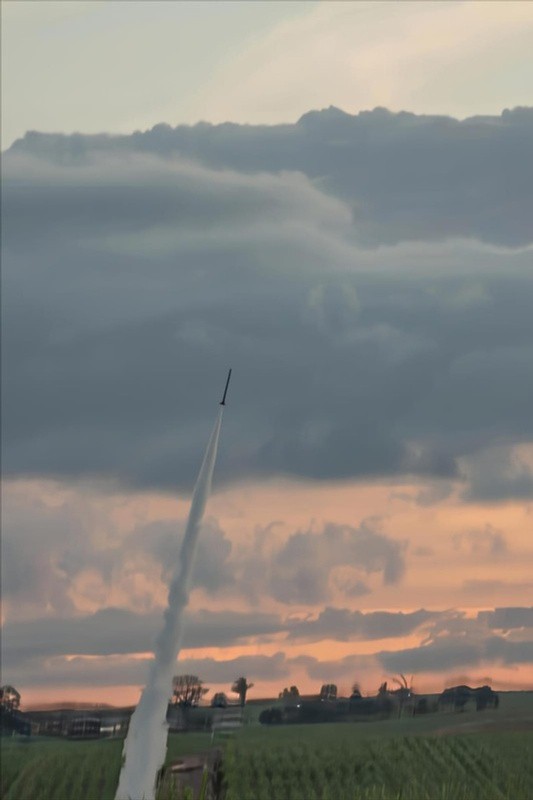
Demogorgon on its way up, 2024.

PRATAP, the flight computer we built ourselves

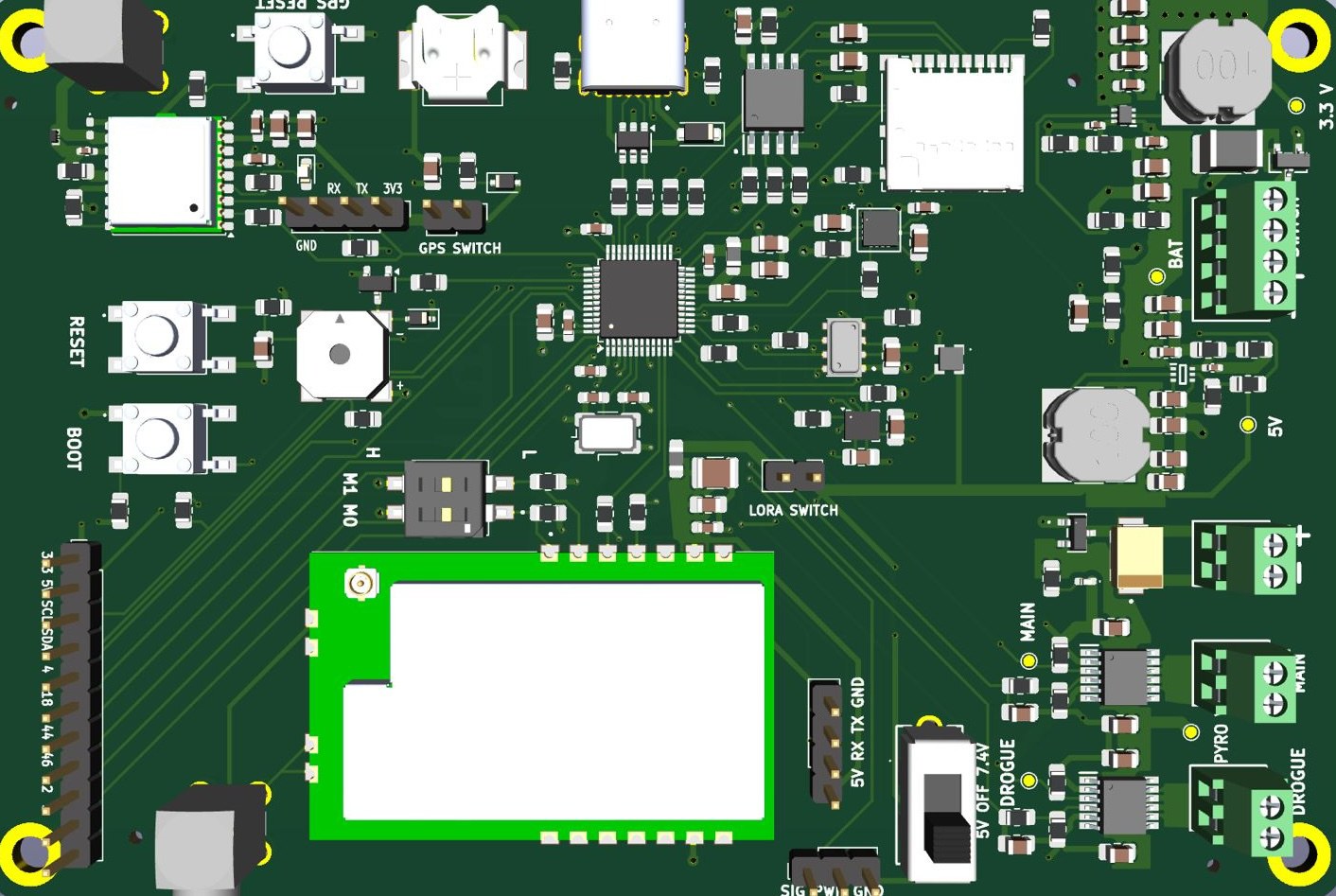
PRATAP is our in-house SMD flight computer, powered by an STM32 microcontroller. It brings a barometer, an IMU, a magnetometer, GPS, QSPI flash, an SD card and LoRa telemetry onto one board.

It has dual pyro channels for parachute deployment and onboard power monitoring. The whole design sits on a compact four-layer PCB optimised for high-altitude flights.

PRATAP flight computer, 3D render of the board.

BOSE: control from a safe distance

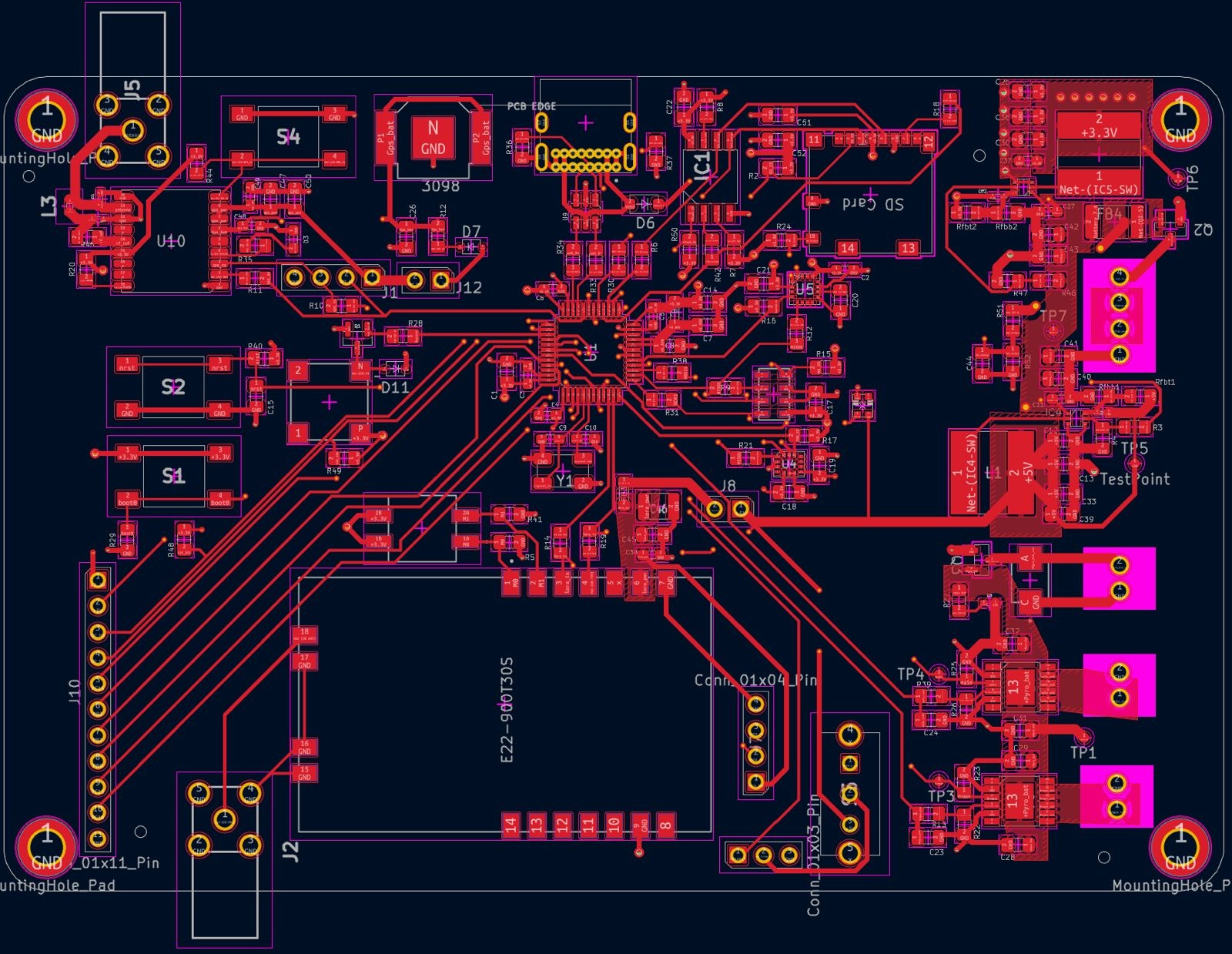
BOSE is an SRAD control system that works near the rocket and the control centre. It manages ignition, valves and telemetry over a long-range LoRa link that has been tested beyond 6 km, so the team can monitor and control the vehicle from launch to cutoff.

On the receiving side, a 14 dBi Yagi antenna and 868 MHz LoRa gave 100% telemetry capture beyond 6 km. BOSE and custom software also produced a landing prediction for LASC 2025.

Board layout for the control electronics.

Two parachutes, one controlled descent

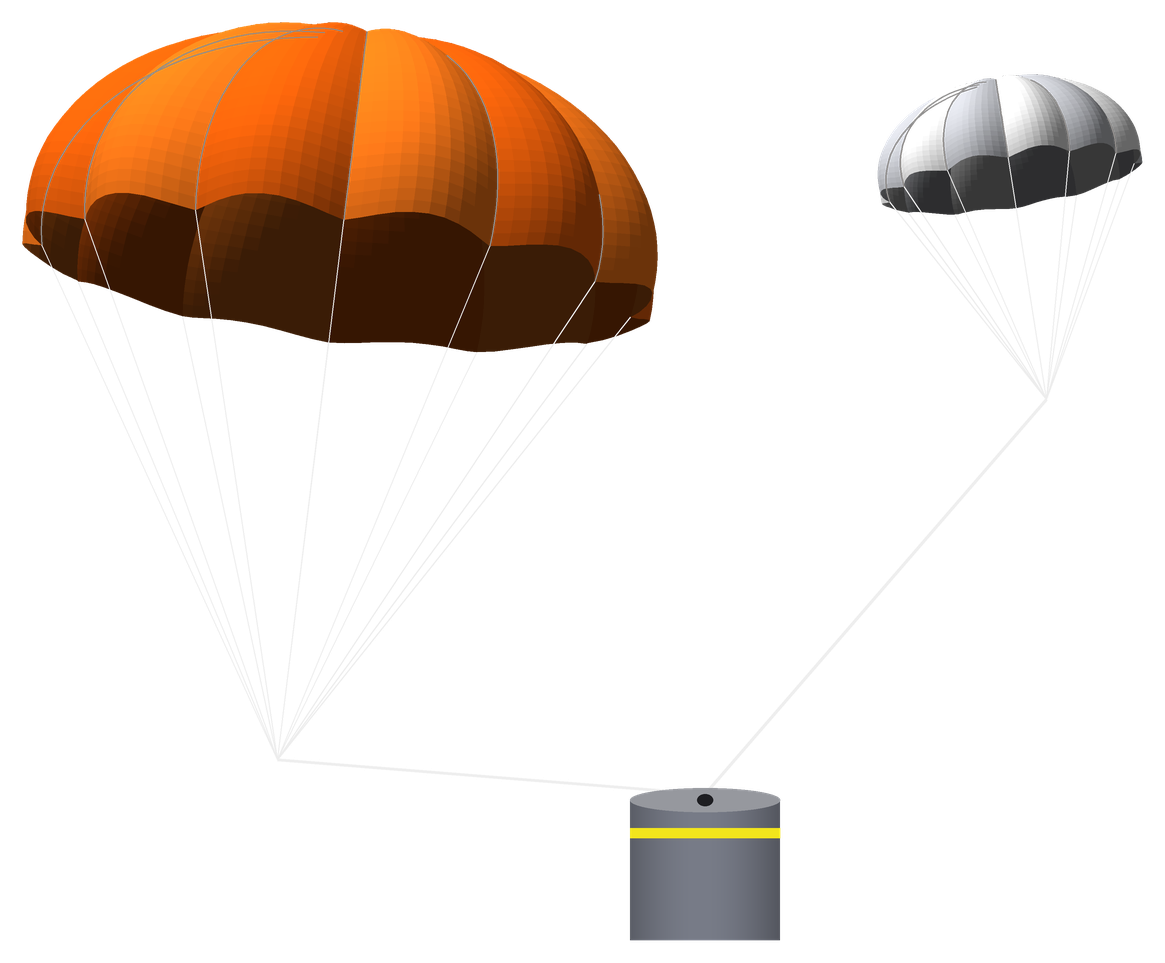
Vikrant comes down under dual elliptical parachutes: a 235 cm main and a 76 cm drogue, each with 12 gores and a drag coefficient of 1.25. The drogue deploys first, then the main is released in a controlled way, all managed by an SRAD controller with a 3-ring release system for a stable descent.

Sahasra uses the same idea with a line-cutter mechanism we developed ourselves and a dual separation, so the drogue comes out first and the main follows.

Dual elliptical parachute system: drogue and main.

Raman: a quantum channel stress analyzer

Raman is our quantum channel stress analyzer project, flying as a 3U CubeSat rideshare mission.

Alongside it we are validating our own compact sensing technologies: the DISHA navigation system, fibre-optic gyroscopes and a Star-Sun tracker. The focus is on performance validation and data collection.

Mission patch for Raman.

From campus launches to the world top three

2017: small-scale launches on our college campus. 2018: APJ at the Spaceport America Cup, 33rd worldwide among 150+ teams and first among Asian teams. 2019: APJ-II, 29th worldwide.

2021: The Perfect Game at LASC, 2nd in the target category and 6th worldwide. 2022: Midnight Sun, 3rd in category and 8th worldwide. 2023: Stellar Eye, 4th worldwide and 1st in Asia.

2024: Demogorgon, the first Indian 1 km AGL SRAD launch. 2025: Sahasra finished third and Vikrant second at LASC.

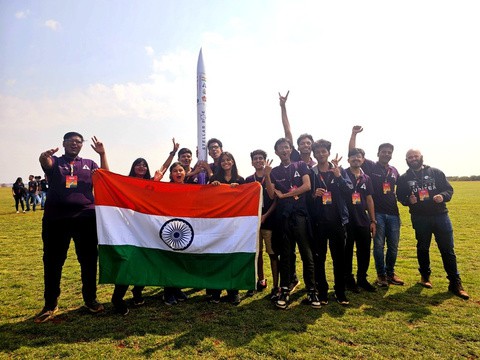
The team after the 2023 Latin American Space Challenge.

Living sensors and an acoustic levitator

Vikrant's payload uses electroactive bacteria that change their electrical activity in response to stress such as vibration, pressure, temperature or radiation. Their bioelectrical signals are captured and processed with an LIF neuron model to work out which stressor is acting.

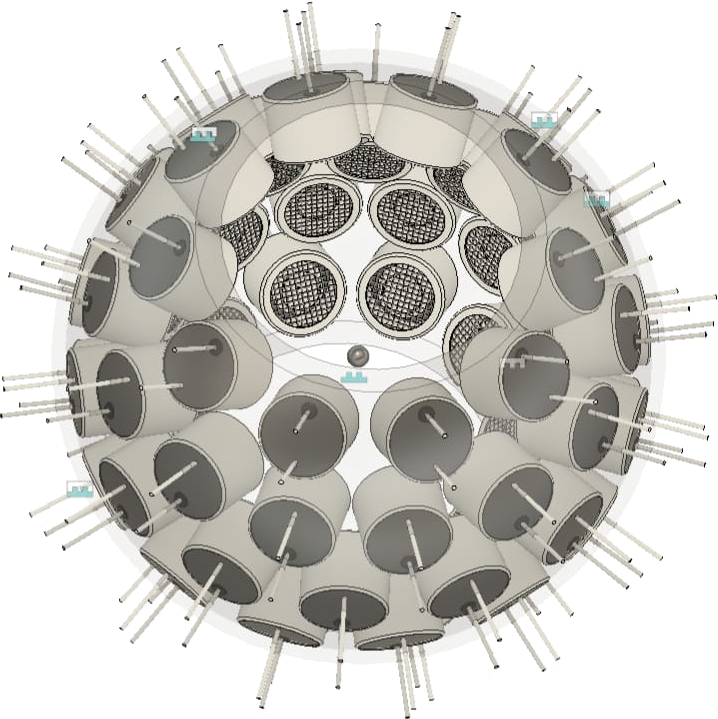
At LASC 2023, Project LEVI advanced research on the Doppler effect with an acoustic levitator and earned an honorary podium session for the team.

Acoustic levitator transducer array.